
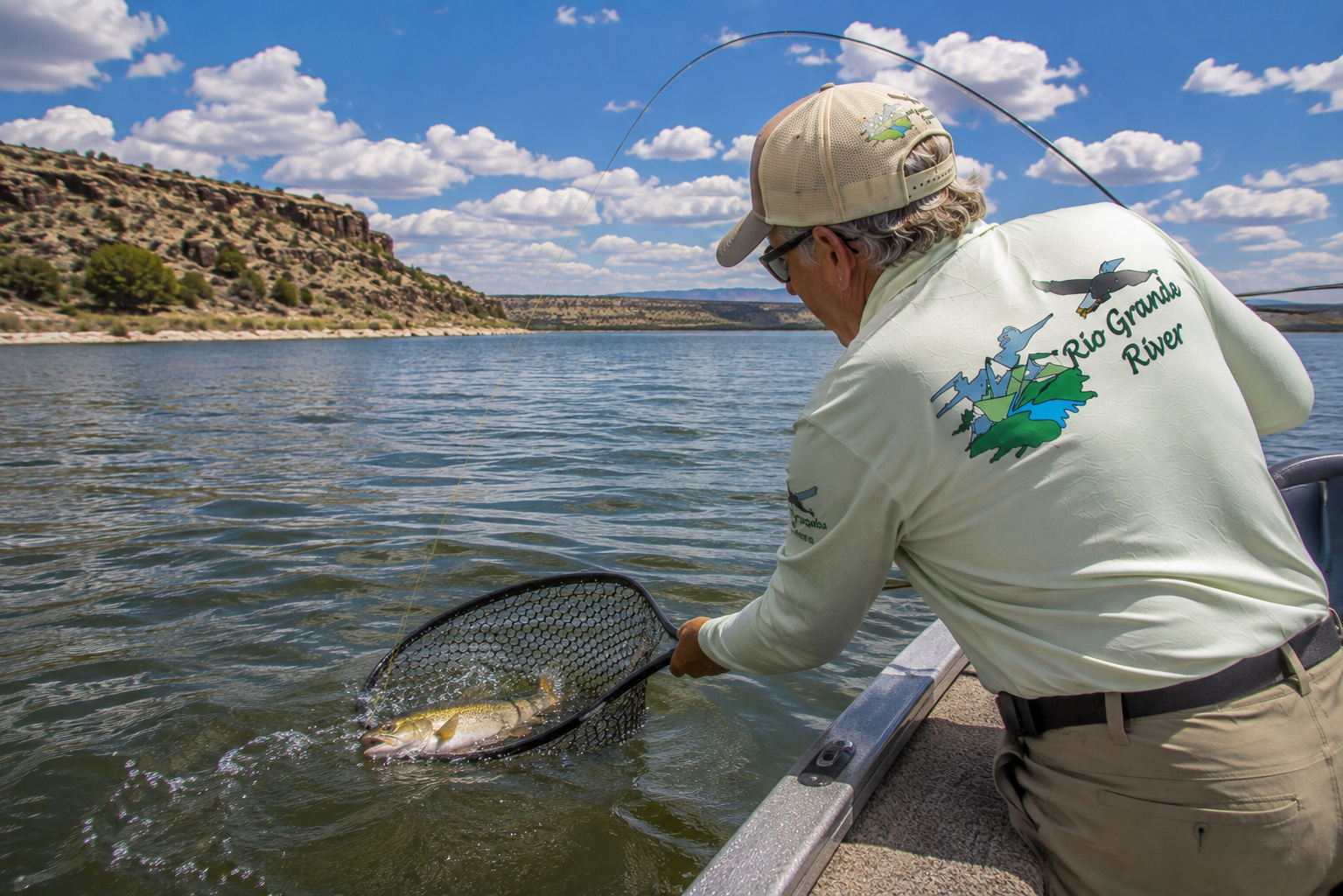
Rio Grande River Santa Fe to Albuquerque New Mexico: From Cochiti Canyon into the Great Cottonwood Bosque
There is something about following a river downstream that changes the way I look at a map.
A highway is mostly interested in where I am going.
A river is interested in where it has been.
By the time the Rio Grande River reaches the country west of Santa Fe, it carries snowmelt from Colorado's San Juan Mountains, water from the Sangre de Cristos, the Rio Chama and dozens of smaller tributaries. It has passed beneath towering canyon walls, beside ancient Pueblo communities, through country that has been occupied by human beings for thousands of years.
Now it is about to change again.
Between Santa Fe and Albuquerque, the Rio Grande leaves much of northern New Mexico's cold-water trout country behind. It passes through White Rock Canyon, enters Cochiti Lake, slips beneath Cochiti Dam, and continues south through a remarkable chain of Pueblo lands before finally entering the broad Albuquerque Valley.
By then, our mountain trout river has become something else.
This is bass country.
Walleye water.
Northern pike water.
Catfish water.
And down around Albuquerque, it is the river of the great cottonwood bosque.
Paulette and I have lived in Santa Fe since 2017, after seventeen wonderful years in the log home we built at Angel Fire. I've spent enough time wandering northern New Mexico with cameras and fishing rods to know that this country never looks exactly the same twice.
Morning light changes it.
Monsoon clouds change it.
Snow changes it.
And the Rio Grande changes it most of all.
So let us pick up the river west of Santa Fe and follow it south.
This chapter takes us through one of the great transitions in the Rio Grande's nearly 1,900-mile journey.
The Rio Grande River Does Not Flow Through Santa Fe
Before we start, I want to clear up one geographical point.
The Rio Grande River does not flow through Santa Fe.
Santa Fe sits east of the main river beneath the Sangre de Cristo Mountains at roughly 7,000 feet elevation. The Rio Grande lies west of the city.
But Santa Fe most certainly belongs to the Rio Grande watershed.
The Santa Fe River begins in the Sangre de Cristo Mountains, flows through the city and ultimately contributes to the greater Rio Grande drainage.
Other mountain streams including the Pojoaque, Nambe and Tesuque systems also carry water westward toward the Rio Grande.
Santa Fe may sit away from the riverbank, but hydrologically we live in Rio Grande country.
And once I begin driving west toward the river, the landscape makes that abundantly clear.
Leaving the Santa Fe Country
West of Santa Fe, the Sangre de Cristo Mountains begin falling behind us.
Ahead lie the Jemez Mountains.
Between them is the Rio Grande Rift, the enormous geological depression that has guided the river through New Mexico for millions of years.
The land here is high desert.
Piñon.
Juniper.
Sage.
Rabbitbrush.
Volcanic mesas.
Arroyos that may remain dry for months and then suddenly roar with muddy water after a summer thunderstorm.
The Rio Grande occupies the bottom of this landscape.
North of Cochiti, it enters White Rock Canyon, where dark volcanic cliffs squeeze close to the river.
It is a rugged and beautiful stretch.
And unlike the open gorge country farther north around Taos, White Rock Canyon can feel surprisingly hidden.
The river is down there somewhere.
You may hear it before you see it.
Feeder Tributaries: Every Creek Adds to the Story
By this point in its journey, the Rio Grande has accumulated an impressive family of tributaries.
Farther upstream, major contributors include the Rio Chama, Red River, Rio Pueblo de Taos and other mountain streams.
The Rio Chama deserves special recognition because it is one of the most important tributaries of the upper Rio Grande.
My article on Rio Chama whitewater rafting and kayaking follows that magnificent tributary through its own canyon country before its water eventually joins the Rio Grande.
Abiquiu Lake lies on the Rio Chama rather than the Rio Grande itself. My Cerrito Recreation Area at Abiquiu Lake article provides another look at that important branch of the watershed.
Closer to the Santa Fe-to-Albuquerque section, tributaries include Santa Fe River, Galisteo Creek, Jemez River and numerous smaller arroyos.
Some contribute year-round water.
Others are seasonal.
During monsoon thunderstorms, an arroyo that looked like nothing but sand and rocks at breakfast can be carrying brown floodwater by supper.
That's desert hydrology.
Never underestimate dry ground simply because it happens to be dry today.
Where Does All This Rio Grande Water Come From?
The answer begins hundreds of miles upstream.
Mountain snowpack is enormously important.
So are tributaries, groundwater, rainfall, reservoir releases and the complicated network of diversions and return flows that now characterize the modern river.
I explored those relationships in more detail in Primary Water Sources for the Rio Grande River Watershed.
The Rio Grande reaching Cochiti is therefore not merely yesterday's rain.
Some of that water began as Colorado snow.
Some came down the Rio Chama.
Some originated in northern New Mexico mountains.
Some has been stored and released.
Some has been diverted.
Some returned.
By the time we see it moving through central New Mexico, the river already has quite a biography. (Rio Grande River)
White Rock Canyon
White Rock Canyon marks one of the most dramatic sections between Santa Fe and Albuquerque.
The Rio Grande cuts deeply through volcanic rock associated with the Jemez volcanic field.
Dark basalt walls rise above the water.
Side canyons descend from the surrounding mesas.
The country feels isolated even though Santa Fe and Los Alamos are not particularly far away.
This is also where our fishing story begins changing.
Up around Taos, I was thinking primarily about trout.
Down here I start thinking about warm-water and cool-water species.
That transition becomes unmistakable at Cochiti.
Cochiti Lake: Where the River Pauses
Cochiti Lake is the centerpiece of this stretch.
The reservoir lies on the Rio Grande roughly 50 miles upstream from Albuquerque within the boundaries of Cochiti Pueblo. The U.S. Army Corps of Engineers manages the lake and dam primarily for flood and sediment control. (USACE South Pacific)
Cochiti Dam interrupts the river's journey and creates a very different aquatic environment.
Current slows.
Depth increases.
Rocky shoreline, points, flats and submerged structure become important.
Instead of reading riffles and current seams, I begin thinking like a reservoir fisherman.
Where is the drop-off?
Where does a point intersect deeper water?
Where is the bait?
What depth are the fish using?
Those are questions I spent a good portion of my life asking on bass lakes.
Different state.
Same fish-catching mathematics.
Cochiti Lake Fish Species
New Mexico's fisheries information identifies Cochiti as a recreational bass water and recognizes largemouth bass, northern pike and walleye as important components of its fishery. State information also lists Cochiti among New Mexico's bass and walleye reservoirs, while crappie, bluegill, channel catfish, carp and white bass are among other species associated with the lake. (NMDOW)
That makes Cochiti a wonderfully interesting reservoir.
You can fish one shoreline for bass and find yourself wondering whether the next strike might belong to a northern pike.
And when a pike decides to leave with your bass lure, he seldom fills out the paperwork first.
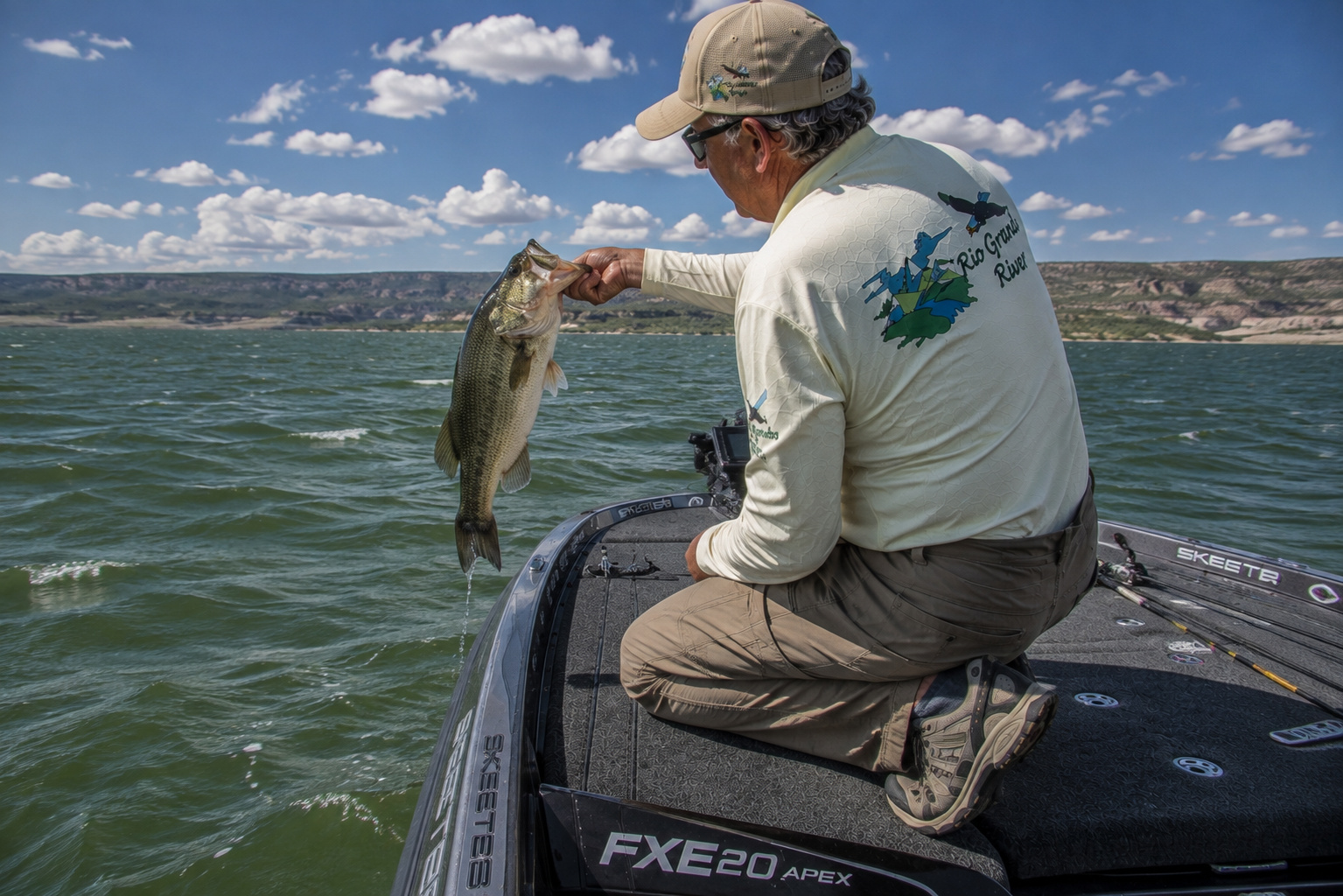
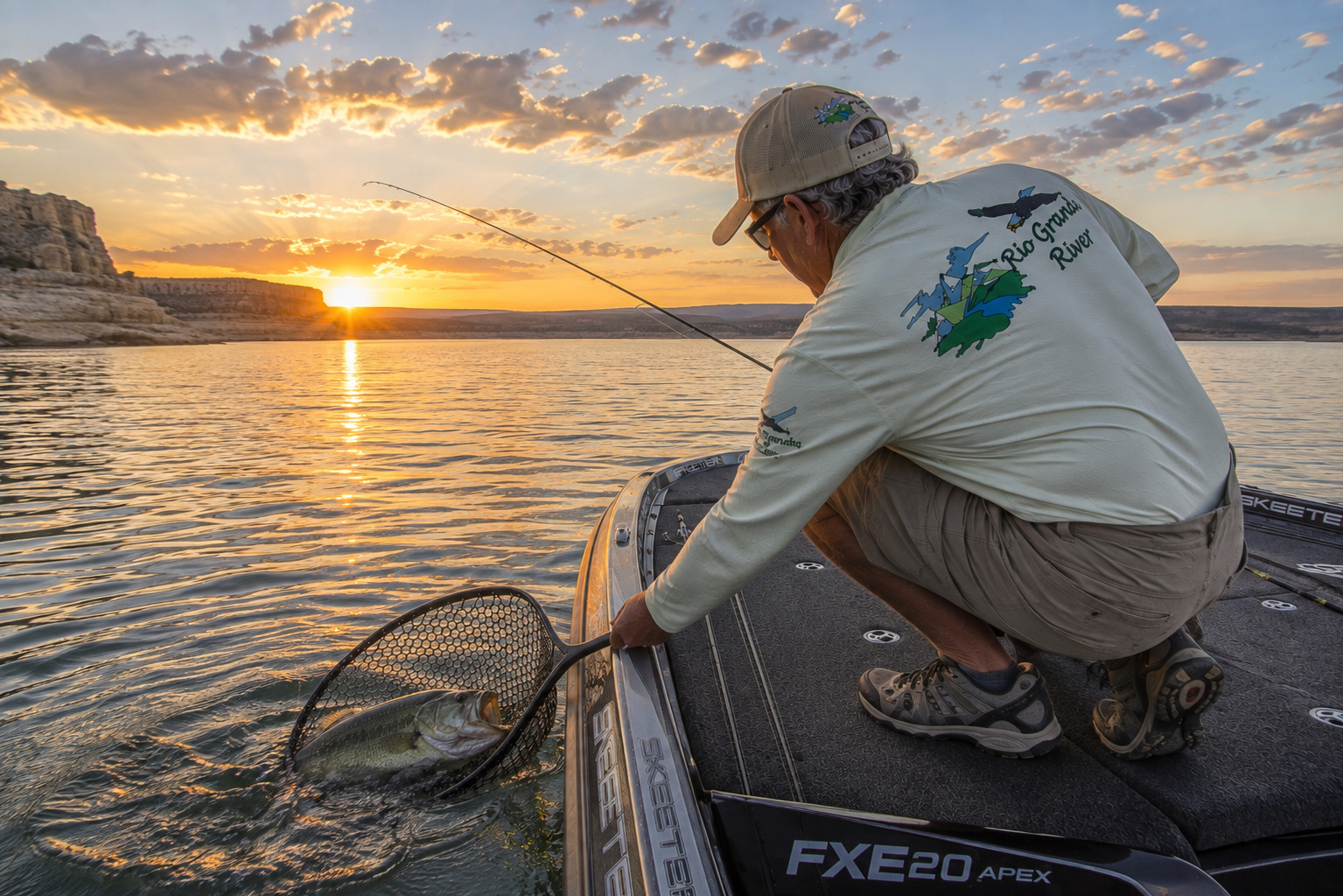
Bass Fishing Cochiti Lake
I spent many years guiding and tournament fishing for largemouth bass, and while New Mexico reservoir fishing isn't identical to the Texas waters I knew so well, bass remain bass.
They need food.
They need suitable temperature.
They need cover or structure.
And they prefer not to expend unnecessary energy.
New Mexico Department of Wildlife guidance says bass begin feeding aggressively as spring water temperatures climb above about 50°F, with the pre-spawn period generally occurring around 50 to 60°F. The state identifies roughly 55 to 65°F with the post-spawn period and notes March through June as prime New Mexico bass months. (NMDOW)
That is when I start looking shallow.
Rocky points.
Protected coves.
Transition banks.
Shallow flats near deeper water.
Any remaining woody cover.
And especially places where several habitat features meet.
My Bass Rods and Reels
For general Cochiti bass fishing, I would bring several outfits.
A 6-foot-10-inch to 7-foot medium-action spinning rod with a 2500-size reel handles finesse presentations beautifully.
For baitcasting, I prefer a 7-foot medium-heavy rod with a good low-profile baitcasting reel in roughly the 6.3:1 to 7.3:1 range.
That outfit handles:
spinnerbaits,
jigs,
Texas rigs,
Carolina rigs,
crankbaits,
and many soft-plastic presentations.
For treble-hooked crankbaits, I prefer something with a little more forgiveness in the rod.
You want the fish hooked.
You don't need to tow him to the boat like a water skier.
Bass Fishing Line
My basic choices would be:
8- to 10-pound fluorocarbon on finesse spinning tackle.
10- to 15-pound fluorocarbon for many baitcasting applications.
15- to 30-pound braid where additional strength or sensitivity is useful.
A braided main line with a fluorocarbon leader is another excellent spinning arrangement.
Clear water usually pushes me toward lighter line and more natural presentations.
Best Bass Lures
If I were fishing Cochiti tomorrow, my starting box would include:
-
3- to 5-inch soft-plastic worms
-
Ned rigs
-
Drop-shot worms
-
Tubes
-
Football jigs
-
Finesse jigs
-
Spinnerbaits
-
Jerkbaits
-
Medium-diving crankbaits
-
Lipless crankbaits
-
Small swimbaits
-
Topwater walking baits and poppers
Natural shad, green pumpkin, watermelon and crawfish colors would receive plenty of attention.
During low-light conditions, darker silhouettes can become productive.
The fish ultimately get the final vote.
Where I Would Look for Cochiti Bass
Spring sends me toward protected shorelines and warming flats.
As the water warms, I move toward points, secondary points, rock transitions and deeper structure.
Summer can push bass deeper during the bright portion of the day.
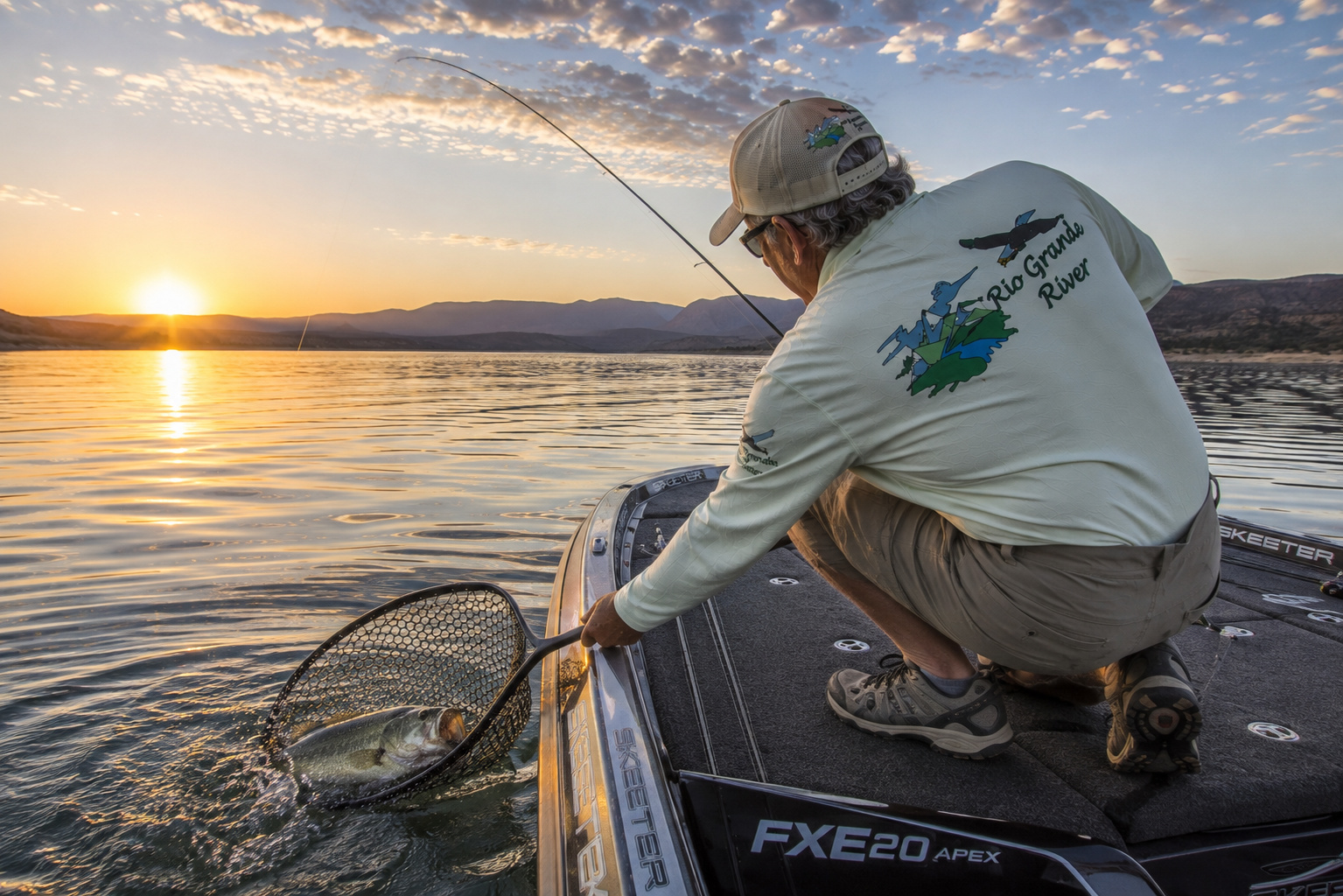
That makes early morning and evening particularly attractive.
I like the first hour after sunrise.
The lake is quieter.
Wind may be lighter.
Bass may still be feeding shallow.
And the light is considerably kinder to an old photographer.
Walleye Fishing Cochiti Lake
Walleye require a different mindset.
They are beautifully designed low-light predators.
Large eyes allow them to hunt effectively when bass fishermen begin complaining that they cannot see.
New Mexico Department of Wildlife identifies Cochiti among the state's walleye reservoirs and notes that walleye fishing is often particularly good in April and May after spawning. (NMDOW)
I would look for walleye around:
rocky points,
drop-offs,
channel edges,
steeper banks,
submerged structure,
and areas where shallow feeding water lies close to depth.
Dawn and dusk deserve special attention.
Cloudy weather can extend the bite.
Walleye Rods, Reels and Line
A 6½- to 7-foot medium-light spinning rod is an excellent general-purpose walleye outfit.
Match it with a 2000- or 2500-size spinning reel.
I like 6- to 10-pound line, depending upon presentation.
Thin braid with a fluorocarbon leader provides tremendous sensitivity for jigging.
Straight fluorocarbon also works well.
The objective is to feel what is happening down there.
Sometimes a walleye bite isn't a bite so much as the lure suddenly feeling slightly different.
Walleye Lures
New Mexico wildlife guidance specifically mentions a quarter-ounce jighead with a curly-tail grub as an effective walleye presentation. It also recommends shallow-running crankbaits after dusk along shorelines near deeper water. (NMDOW)
My box would include:
1/8- to 3/8-ounce jigs
3- to 4-inch curly-tail grubs
paddle-tail swimbaits
minnow-style crankbaits
jerkbaits
blade baits
small spoons
Natural baitfish colors are dependable.
Chartreuse can be excellent when visibility decreases.
Northern Pike at Cochiti
Then there are the pike.
A northern pike is constructed like somebody asked nature to design a freshwater ambush predator and gave it no budget restrictions.
Long body.
Big mouth.
Teeth.
Attitude.
Cochiti supports a northern pike fishery under New Mexico's management program. (NMDOW)
Pike often relate to shallow cover, weed edges where available, points, coves and areas where baitfish concentrate.
Spring and fall can be especially interesting when cooler water encourages pike activity.
Pike Rods and Lures
I would step up to a 7-foot medium-heavy spinning or baitcasting rod.
Use heavier line than you would for trout or finesse bass fishing.
Good pike lures include:
large spoons
spinnerbaits
swimbaits
jerkbaits
large crankbaits
and inline spinners.
A wire or heavy abrasion-resistant leader can save a lure from those teeth.
Use long-nose pliers when unhooking pike.
I have great respect for a fish whose mouth resembles a drawer full of steak knives.
Other Fish Worth Catching
Cochiti is not limited to those three headline species.
Crappie can provide excellent light-tackle fishing.
Bluegill are wonderful for youngsters and adults who haven't forgotten how much fun a small fish can be.
Channel catfish provide another opportunity, particularly during warmer months.
White bass can roam open water following bait.
New Mexico's fish-consumption information also recognizes Cochiti populations of bluegill, crappie, northern pike, walleye and white bass, among others. (NMDOW)
Always check current state consumption advisories before keeping fish for the table.
Spinning Baits
Where regulations allow, live or natural bait remains effective.
For walleye, worms can be excellent.
For catfish, appropriate natural baits work well.
Crappie respond to small jigs and permitted bait presentations.
But I increasingly favor artificial lures because they let me cover water.
Fishing a reservoir is partly detective work.
I want to eliminate empty water.
Boating Cochiti Lake
Cochiti has an unusual feature that I rather like.
It is a no-wake lake.
New Mexico's 2026-2027 fishing regulations restrict boats to trolling speeds, and the Corps likewise identifies Cochiti as no-wake water. (NMDOW)
That changes the atmosphere considerably.
You don't have bass boats roaring from point to point at highway speed.
Fishing becomes quieter.
Kayaks and paddlecraft feel more at home.
The lake has public boat ramps at both the Cochiti Recreation Area on the west and Tetilla Peak Recreation Area on the east. As of August 2026, the Corps reports the ramps reopened and the lake open to boats and watercraft. (USACE South Pacific)
One caution deserves emphasis.
Wind.
The Corps warns boaters to exercise caution when winds reach roughly 15 to 20 mph, and wind-warning lights are installed near the ramps. (USACE South Pacific)
Mountain and high-desert winds can arrive quickly.
I learned as a pilot that weather has no obligation to respect your original flight plan.
The same rule applies to boats.
Public Access at Cochiti Lake
Cochiti Lake lies within Cochiti Pueblo lands, so public access must be treated carefully.
The Corps operates two designated public recreation areas, Cochiti Recreation Area and Tetilla Peak Recreation Area.
Land outside those public recreation areas belongs to Cochiti Pueblo and is not open to general public access. (USACE South Pacific)
That is straightforward enough.
Stay in designated public areas.
Respect closures.
Do not wander onto Pueblo land.
A New Mexico fishing license is required for Cochiti Lake. (NMDOW)
The spillway is currently closed to fishing. (NMDOW)
Camping at Cochiti Lake
This is an excellent place to turn a fishing trip into a few days outdoors.
For the 2026 season, camping at Cochiti Lake is reservation-only.
The west-side recreation area includes several camping loops with combinations of tent sites, water and electrical hookups, showers and other facilities.
Tetilla Peak Campground on the east side is also open for the 2026 recreation season and requires reservations. (USACE South Pacific)
Current Stage II fire restrictions are in effect, with the Corps presently allowing propane fires but prohibiting ordinary campfires and charcoal until restrictions change. (USACE South Pacific)
Check current conditions immediately before leaving home.
Fire restrictions in New Mexico can change quickly.
Cochiti Pueblo
The Rio Grande cannot be understood here without understanding the Pueblo communities.
Cochiti is one of the Keres-speaking Pueblos of the middle Rio Grande.
Its people's relationship with the river predates Cochiti Dam, Albuquerque, Santa Fe as a Spanish capital and the United States itself.
For a broader look at that history, my Rio Grande Pueblos article follows Indigenous relationships with the river across centuries.
The Rio Grande supported agriculture.
Irrigation.
Wildlife.
Travel.
Trade.
Community.
Ceremony.
The modern fisherman sees a lake.
The deeper history sees water sustaining generations. (Rio Grande River)
Pueblos Downstream Toward Albuquerque
South of Cochiti, the Rio Grande passes through a remarkable cultural corridor.
Among the Pueblo communities associated with this middle Rio Grande country are Kewa Pueblo, San Felipe Pueblo, Santa Ana Pueblo and Sandia Pueblo.
These are living sovereign communities, not historical exhibits.
That distinction matters.
Visitors should respect tribal boundaries, closures, photography rules and access requirements.
If land is not clearly identified as public, do not assume it is.
Ask permission.
Obey signs.
The old ranch rule still works pretty well: leave gates and property the way you found them, and don't go where you haven't been invited.
Kewa Pueblo
Kewa Pueblo, historically called Santo Domingo Pueblo, sits along the Rio Grande downstream from Cochiti.
The Pueblo is famous for its jewelry traditions, particularly turquoise and shell work.
Agriculture has also been part of life here for generations.
The river and irrigation systems made farming possible in country where rainfall alone would never have been dependable enough.
San Felipe Pueblo
Continue south and the river reaches San Felipe Pueblo.
Again, water defines the landscape.
Cottonwoods follow the river.
Fields occupy suitable floodplain soils.
Beyond them rises dry mesa country.
That contrast is one of the visual signatures of New Mexico.
Brown desert.
Blue mountains.
Green river corridor.
Three landscapes occupying the same photograph.
Santa Ana Pueblo and the Jemez River
Near Santa Ana, another important tributary enters the Rio Grande.
The Jemez River drains the Jemez Mountains west of Santa Fe and ultimately joins the Rio Grande in the Bernalillo area.
It carries snowmelt, rainfall and monsoon runoff from an entirely different mountain system than the Sangre de Cristos.
The Jemez can also deliver sediment.
After a heavy summer storm, tributaries like this can dramatically change the color and clarity of the main river.
That matters to fishermen.
Clear water and muddy water are different fisheries.
Water Levels Below Cochiti
Cochiti Dam changes the flow regime downstream.
The reservoir is operated for flood and sediment control, working in conjunction with other Corps projects in the Rio Grande basin. (USACE South Pacific)
Below the dam, river levels are influenced by releases, upstream snowmelt, tributary inflow, irrigation demands and monsoon rainfall.
There is no useful single number for "normal."
Check current flow information before boating or fishing.
A river is a moving target.
That is part of its charm and occasionally part of its danger.
The Rio Grande Arrives in Albuquerque
Eventually the Sandia Mountains appear ahead.
And then Albuquerque.
By now the Rio Grande looks nothing like the mountain stream we followed near Creede.
The river has entered a broad alluvial valley.
Cottonwoods dominate the floodplain.
The channel wanders between sandbars.
Irrigation structures and drains become part of the landscape.
This is the Middle Rio Grande.
And running through Albuquerque is one of its greatest natural treasures.
The Albuquerque Bosque
"Bosque" simply means forest in Spanish.
But along the Rio Grande, the word has acquired a personality of its own.
The Rio Grande bosque is a ribbon of cottonwood forest following the river through an otherwise dry landscape.
Within Albuquerque, the protected Rio Grande Valley State Park corridor extends for about 20 miles and roughly 4,300 acres. (City of Albuquerque)
That is remarkable when you think about it.
New Mexico's largest city has a long wild green corridor running right through its middle.
Cottonwoods.
Willows.
Coyotes.
Porcupines.
Beaver.
Migratory birds.
Raptors.
And the Rio Grande moving quietly beneath it all.
Fishing the Rio Grande Around Albuquerque
By Albuquerque, I would no longer approach the Rio Grande as primarily a trout stream.
This is warm-water river fishing.
Depending upon location and conditions, anglers may encounter channel catfish, white bass, carp and other warm-water species. Current New Mexico consumption guidance specifically lists channel catfish and white bass for the Rio Grande reach associated with the Albuquerque area between I-25 and U.S. 550. (NMDOW)
Fishing strategy changes accordingly.
For catfish, look for:
deep holes,
outside bends,
slower current,
eddies,
and deeper water near structure.
For white bass, watch for baitfish activity and moving schools.
Spinning tackle in the medium-light to medium range is useful.
Small spoons, jigs, crankbaits and swimbaits can cover water efficiently.
Productive Water Temperatures
Each species has its preferences.
For bass, activity increases significantly as water climbs through the 50s, with spring fishing particularly productive around 50 to 65°F. (NMDOW)
Walleye remain comfortable in cooler water and often feed especially well during low-light periods.
Northern pike prefer cooler conditions and can become less active in hot summer water.
Catfish generally become increasingly active as water warms.
That is why I don't think in terms of one "perfect" Rio Grande temperature anymore.
It depends upon which fish I'm trying to catch.
Best Time of Day
For bass during summer, I like dawn and evening.
For walleye, those low-light periods become even more important.
Pike can feed throughout the day during cool conditions.
Catfish often become more active toward evening and after dark.
And for an eighty-plus-year-old fisherman who also carries a camera, sunrise has another advantage.
It is simply a fine time to be alive and outdoors.
Public Access in Albuquerque
Albuquerque provides some excellent public opportunities to experience the river and bosque.
The Paseo del Bosque Trail follows the river corridor.
City Open Space lands provide numerous trailheads and picnic areas.
Pueblo Montaño offers west-side access to the bosque trail system, while Rio del Norte provides accessible trails beneath cottonwoods and opportunities to watch migratory wildlife. (City of Albuquerque)
Fishing access varies, so pay attention to signs, closures, private property and restoration areas.
The river may be public water, but that does not automatically make every route to it public.
Wildlife Along the Middle Rio Grande
This is one of the great wildlife corridors of the Southwest.
I would keep a camera ready for:
sandhill cranes
Canada geese
bald eagles
great blue herons
snowy egrets
red-tailed hawks
Cooper's hawks
coyotes
beaver
porcupines
mule deer
rabbits
and a remarkable variety of songbirds.
The bosque is especially important during migration and winter.
Sandhill cranes are among the great seasonal spectacles.
You often hear them before you see them.
That rolling, prehistoric call carries across the valley, and then a line of cranes appears against the Sandia Mountains.
I've photographed a lot of wildlife over the years.
A flight of cranes still makes me stop whatever I'm doing.
Recreational Activities from Cochiti to Albuquerque
Fishing is only one reason to follow this stretch.
At Cochiti Lake there is boating, paddling, swimming in designated areas, camping, picnicking and wildlife watching.
Along the river there is hiking, birding and photography.
Around Albuquerque the bosque offers walking, bicycling, horseback riding in appropriate areas and quiet nature observation.
Cochiti's no-wake rule makes the reservoir particularly appealing for paddlers and anglers who prefer a quieter lake. (USACE South Pacific)
The Corps also reminds visitors using kayaks, paddleboards and other small craft to wear appropriate life jackets. (USACE South Pacific)
Weather Through the Seasons
Spring
Spring brings warming water and increasingly active bass.
It also brings wind.
New Mexico spring wind deserves its own weather category.
One minute the lake is pleasant.
The next minute every loose hat in Sandoval County is headed toward Texas.
Watch forecasts carefully, especially before boating Cochiti.
Summer
Summer means heat, bright sun and monsoon thunderstorms.
Fish early.
Carry plenty of water.
Wear sun protection.
Watch the mountains for developing storms.
A thunderstorm does not have to be directly overhead to affect the river.
Autumn
Autumn may be my favorite season.
The cottonwoods turn gold.
Mornings become crisp.
Water temperatures cool.
Fishing improves for several species.
Migratory birds begin arriving.
The combination of golden bosque, blue sky and Sandia Mountains is difficult for a photographer to resist.
Winter
Winter brings cold nights and generally quieter recreation areas.
Snow occasionally reaches the valley.
The Sandias turn white.
Migratory birds occupy the bosque.
Fishing can slow, but wildlife photography becomes outstanding.
New Mexico winter sunlight has a clarity all its own.
Points of Interest Along the Rio Grande River
I would not make this drive without allowing time for side trips.
Cochiti Lake deserves at least a day.
The Pueblo country deserves respect and curiosity.
The Jemez Mountains rise west of the river.
The Sandia Mountains dominate the Albuquerque horizon.
In Albuquerque, the bosque itself is an attraction.
The Rio Grande Nature Center State Park area provides another excellent opportunity to understand the river ecosystem.
And there is Old Town Albuquerque, where centuries of Spanish and Hispano history sit only a short distance from a river that supported human settlement long before Spain existed here.
The deeper I travel along the Rio Grande, the harder it becomes to separate natural history from human history.
They occupy the same banks.
Getting There
From Santa Fe, Interstate 25 provides the fastest route toward Albuquerque.
But if the purpose is to explore the Rio Grande rather than simply reach Albuquerque, I would allow considerably more time.
Access toward Cochiti is available from the I-25 corridor through the Peña Blanca and Cochiti area.
The Corps operates public recreation facilities on both sides of Cochiti Lake.
From there, I-25 continues south through the middle Rio Grande corridor toward Bernalillo and Albuquerque.
Around Albuquerque, major roads cross the river at several locations and provide connections to public bosque access points.
Always verify current road, recreation and Pueblo access conditions before setting out.
The Rio Grande Has Become a Different River
What strikes me most about the Rio Grande River between Santa Fe and Albuquerque is how completely its personality changes.
Upstream, I carried a 5-weight fly rod and thought about caddis.
Here, I am carrying baitcasting rods and thinking about bass.
At Cochiti I might throw a crankbait across a rocky point for a largemouth.
An hour later I might jig deeper water for walleye.
Another cast might encounter a northern pike.
Downstream in Albuquerque, I may put away the fishing rod entirely and walk through cottonwoods photographing sandhill cranes.
Same river.
Different world.
That is what makes following the Rio Grande so fascinating.
One More Evening Beside the River
If I could choose how to finish this chapter, I would choose an October evening.
Paulette and I have spent the day following the river south.
The fishing rods are back in the vehicle.
My camera is still out.
It usually is.
We walk beneath old cottonwoods in the Albuquerque bosque.
Their leaves have turned yellow.
A few fall around us whenever the breeze moves through.
Across the river, the Sandia Mountains are beginning to catch the evening light.
A great blue heron stands in the shallows.
Farther upstream, a beaver slips into the water and disappears with hardly a ripple.
Then I hear cranes.
I stop.
Paulette hears them too.
We look north.
A dozen sandhill cranes appear above the cottonwoods, their long necks stretched forward, wings moving slowly against the fading blue sky.
Behind them, the Sandias begin turning pink.
I raise the camera.
For a few seconds everything comes together.
River.
Mountains.
Birds.
Autumn light.
And the woman who has shared these Southwestern adventures with me for more than forty years standing beside me.
I take the photograph.
Then I lower the camera and simply watch.
Growing up on Kansas ranches taught me that water was never something to take for granted.
Our years high in the mountains at Angel Fire taught me where much of this Southwestern water begins.
Living in Santa Fe has shown me what happens as those mountain streams come together.
And now Albuquerque shows us what a great river can create in the middle of a desert.
A forest.
A wildlife corridor.
A city.
Civilizations.
And memories.
Below us, the Rio Grande River continues south.
It doesn't care that we have reached Albuquerque.
There are hundreds of miles ahead.
Bosque del Apache.
Elephant Butte.
Truth or Consequences.
Las Cruces.
El Paso.
Big Bend.
Amistad.
Falcon.
And eventually the Gulf.
I look downstream.
At eighty-plus years old, I understand something about long journeys that I probably didn't appreciate when I was twenty.
The destination matters.
But the bends in the river are where most of life happens.
So we'll stop here for the evening.
Tomorrow, we'll follow the Rio Grande farther south.
0 Comments